

Windsor Castle's Quadrangle: The Heart of the Upper Ward
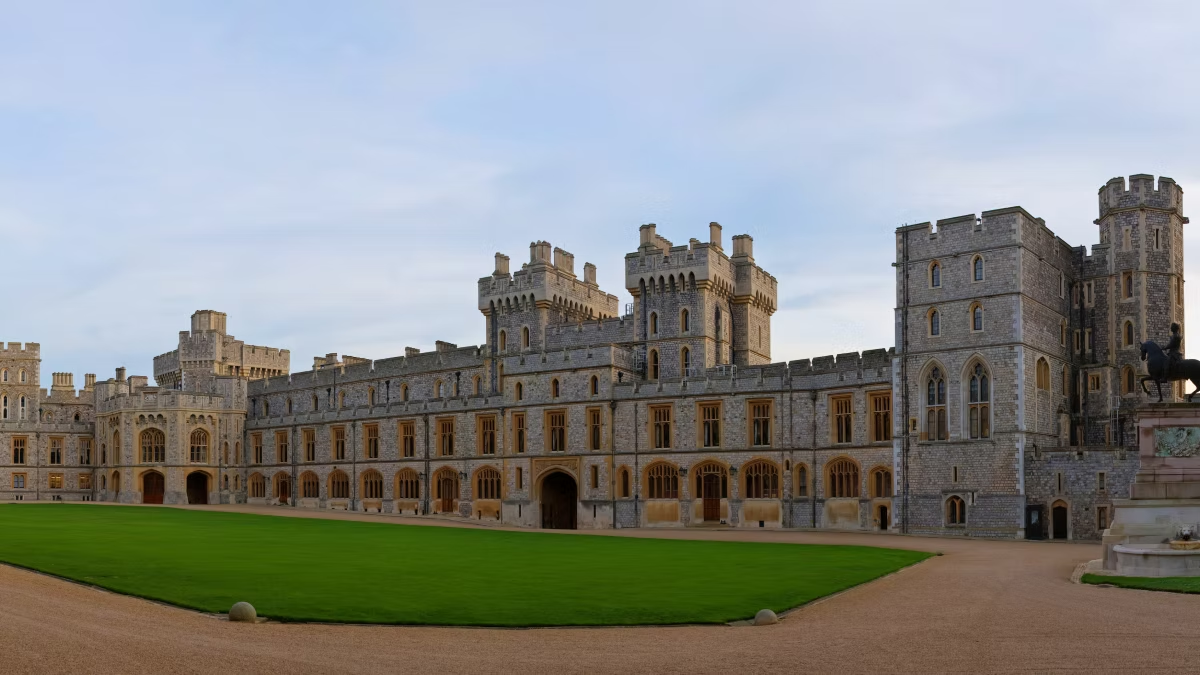
The Quadrangle is the central courtyard of the Upper Ward at Windsor Castle. It is enclosed by the State Apartments to the north, the private royal apartments to the south and east, and the Round Tower mound to the west. Visitors see the Quadrangle when passing through the castle grounds between the Middle Ward and the State Apartments entrance. When the King is in official residence, the Changing of the Guard ceremony moves here from the Lower Ward. State visits are received in the Quadrangle. The Charles II equestrian statue stands at the Round Tower end.
The Quadrangle is the inner courtyard at the heart of Windsor Castle — not a public square but the working centre of the castle’s operational life as a royal palace. Foreign heads of state are received here with military honour guards. The Changing of the Guard moves here when the King is home. At special events it has hosted living history encampments for jousting weekends. And at the Round Tower end, the 17th-century equestrian statue of Charles II — cast in the Roman manner, complete with laurel wreath — watches over the space where the king who restored the monarchy once held his court.
What the Quadrangle Is
The Quadrangle is the central enclosed courtyard of the Upper Ward — the easternmost and largest of Windsor Castle’s three wards. It is roughly rectangular in plan and enclosed on all four sides by the castle’s principal buildings:
- North side: The State Apartments — the principal ceremonial rooms open to visitors
- East side: Further residential buildings and the entrance to the private royal apartments
- South side: The King George IV Gate, the private royal apartments (not open to visitors), and the rooms created for George IV
- West side: The Round Tower on its mound, approached through the Norman Gate
The Quadrangle is not a fixed stop on the standard visitor route in the same way that the State Apartments or St. George’s Chapel are — but visitors inevitably pass through it or alongside it at various points in their visit, and it rewards a pause.
The Quadrangle is the central courtyard of the Upper Ward, enclosed by the State Apartments to the north, the private royal apartments to the south and east, and the Round Tower to the west. It is the venue for state visit ceremonies and (when the King is in residence) the Changing of the Guard. A 17th-century equestrian statue of Charles II stands at the Round Tower end. Visitors pass through it on the standard visitor route.
A Working Royal Courtyard
The Quadrangle is not merely an architectural feature — it is an active ceremonial space still used for significant royal events.
State visits: When foreign heads of state make official visits to Windsor Castle, they are received in the Quadrangle with a full military guard of honour. The foreign head of state arrives by carriage through the George IV Gateway at the south of the Quadrangle, where the guard of honour is drawn up. President Biden’s brief visit to Windsor Castle in July 2023 — where King Charles III received him — involved an inspection of the guard of honour in the Quadrangle.
The Changing of the Guard — special location: When the King is in official residence at Windsor Castle, the Changing of the Guard ceremony moves from the Lower Ward to the Quadrangle. This is how visitors know where the ceremony will take place on any given day: check the flag above the Round Tower before you enter the castle. Royal Standard flying = King in residence = ceremony in the Quadrangle. Union Flag flying = King absent = ceremony in the Lower Ward.
Special events: On selected occasions throughout the year, the Quadrangle is opened to visitors for themed events — medieval jousting weekends, living history encampments, and family history days. Jousting tournaments were actually held in this space during the medieval period. The Quadrangle has the scale and enclosure to make these events genuinely atmospheric.
The Charles II Equestrian Statue
At the west end of the Quadrangle, closest to the Round Tower, stands the equestrian statue of King Charles II. The statue has an unusual character: rather than depicting the king in contemporary 17th-century dress, it represents him in the Roman manner — in the style of Caesar, wearing Roman armour and a laurel wreath on his head. This Classicising approach was common in 17th-century royal portraiture, connecting contemporary monarchs to the authority and prestige of the ancient Roman emperors.
Charles II placed the statue himself after the Restoration of the monarchy in 1660 — a deliberate statement of royal legitimacy and permanence after the rupture of the Civil War and the Interregnum. It is the oldest surviving piece of public sculpture at Windsor Castle and a direct link to the monarch who undertook the most significant 17th-century rebuilding of the State Apartments.
The Surrounding Buildings
The State Apartments (north range) — the principal indoor visitor experience, with the Grand Entrance on the north side of the Quadrangle. This is where the King’s Staircase and ceremonial rooms begin.
The Norman Gate (west entrance) — the 14th-century gatehouse through which visitors pass to reach the Quadrangle from the Middle Ward. Despite its name, it was built by Edward III in the 1300s. The vaulted passageway retains medieval carved lion masks and visible portcullis grooves.
The private royal apartments (south and east ranges) — these are not open to visitors but form the visual enclosure of the Quadrangle’s south and east sides. The windows of these buildings look down into the Quadrangle from the private rooms where the King and members of the Royal Family stay during visits to Windsor.
The King George IV Gate (south gateway) — the ceremonial entrance to the Quadrangle from the Long Walk approach, added by George IV in the 1820s as part of his remodelling of the Upper Ward. State visitors arriving by carriage enter through this gate.
Engine Court — a smaller courtyard adjacent to the Quadrangle, containing the Engine Room café (a kiosk-style refreshment point) and serving as a transition space between the Quadrangle and the castle’s service areas.
History of the Quadrangle
The basic form of the Quadrangle was established by Edward III in the 14th century, when he rebuilt the Upper Ward as a grand palace rather than a purely defensive fortress. Edward created self-contained lodgings for his court around the east and south edges of the ward, establishing the enclosed quadrangular layout. The Norman Gate was built to secure the west entrance at the same time.
The Quadrangle has been the setting for royal ceremony continuously since then. Medieval jousting tournaments took place here — the enclosed space and the spectators’ vantage points from the surrounding buildings and walkways made it an ideal venue. Henry VIII in particular used the Quadrangle for tournament entertainment.
George IV’s 1820s remodelling gave the Quadrangle’s surrounding buildings their current appearance: the mock-medieval battlements, towers, and Gothic windows that characterise the exterior of the Upper Ward. Wyatville’s redesign made the Quadrangle into the imposing, theatrical space it is today.
Viewing the Quadrangle
Visitors typically see the Quadrangle at two points during their visit:
On the way to the State Apartments: After passing through the Norman Gate from the Middle Ward, visitors cross an area adjacent to the Quadrangle and approach the cloakroom and State Apartments entrance. The Engine Room café is in this area.
After exiting the State Apartments: On the exit route, visitors may pass through or alongside the Quadrangle area before reaching the shops and exit path.
On days when the King is in residence and the Changing of the Guard takes place here, the Quadrangle can be viewed from various vantage points within the Upper Ward precincts. Ask castle staff for the best viewing position when you arrive.
Photography is permitted throughout the Quadrangle and surrounding areas. The views of the Round Tower from the Quadrangle, and the view up to the State Apartments facade, are among the best architectural compositions within the castle grounds.
Frequently Asked Questions
Is the Quadrangle open to visitors?
Visitors pass through the Quadrangle area as part of the standard route through the castle precincts. It is not a ticketed attraction with separate access — it is part of the general castle grounds included with every admission ticket.
What happens in the Quadrangle?
It is the venue for state visit ceremonies, and for the Changing of the Guard when the King is in residence. Special events including medieval jousting weekends have also been staged here.
How do I know if the Changing of the Guard will be in the Quadrangle?
Check the flag flying from the Round Tower as you arrive. The Royal Standard (red, gold, and blue) means the King is in residence and the ceremony will take place in the Quadrangle. The Union Flag means the King is absent and the ceremony takes place in the Lower Ward.
Where is the Charles II equestrian statue?
At the west end of the Quadrangle, near the entrance through the Norman Gate, facing into the courtyard. It is the oldest surviving sculpture at Windsor Castle.
Was jousting really held in the Quadrangle?
Yes. Medieval jousting tournaments took place in the Upper Ward Quadrangle — the enclosed space provided an ideal venue for royal entertainment. The Royal Collection Trust has staged living history jousting recreations in the Quadrangle on selected event weekends.
